

 Moroccan Restaurant
 American Restaurant
 Asian Restaurant
 Chinese Restaurant
 French Restaurant
 Indian Restaurant
 Italian Restaurant
 Japanese Restaurant
 Lebanese Restaurant
 Mediterranean Restaurant
 Mexican Restaurant
 Spanish Restaurant
 Thai Restaurant
 Turkish Restaurant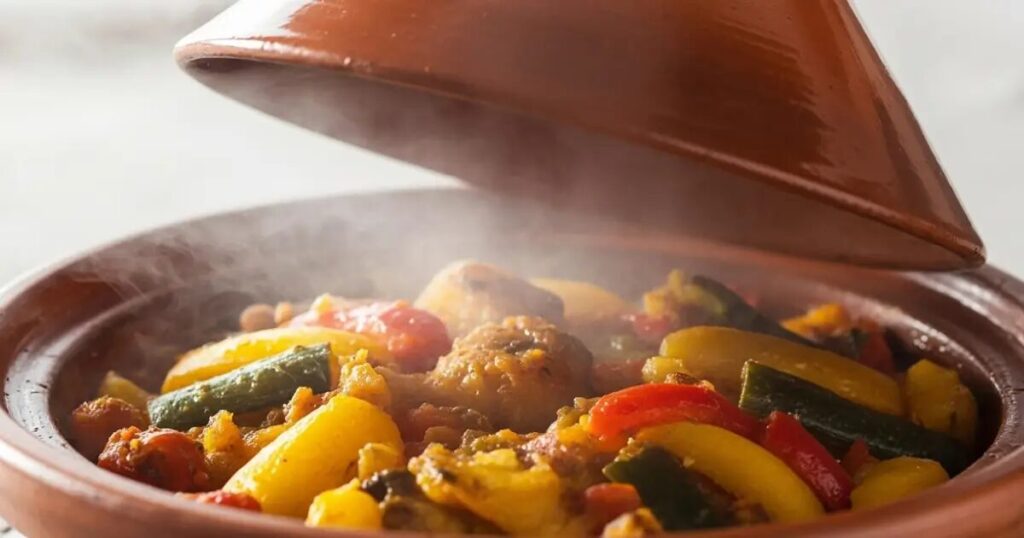
Moroccan cuisine invites you to embark on a journey through authentic flavors and discover the soul of North Africa—a culinary tradition woven from centuries of Berber, Arab, Andalusian, and Mediterranean influences. It is more than just food; it is a vibrant tapestry of spice-laden aromas, communal dining rituals, and time-honored recipes that tell the story of a nation.
Moroccan Cuisine: A Journey Through Authentic Flavors
From the bustling souks of Marrakech to the quiet hearths of mountain villages, authentic Moroccan food offers a profound taste of place, a flavorful journey that engages all the senses and invites you to experience the legendary hospitality at the very heart of Moroccan culture.
The Soul of the Spice Souk: Why Moroccan Cuisine Captivates the World
To understand Moroccan food is to understand a culture of generosity and connection. Meals are not rushed affairs but celebrated events, often centered around a shared tagine or a communal platter of couscous. The cuisine is a direct reflection of the land—the fertile plains, the abundant coast, and the rugged Atlas Mountains. But its true magic lies in its history as a crossroads of civilizations. Each wave of inhabitants, from the indigenous Berbers to the Arab conquerors, the exiled Moors of Spain, and the French and Spanish colonial powers, left an indelible mark on the pantry. This fusion never feels chaotic; instead, it’s a harmonious blend where saffron meets ginger, and sweet dried fruits balance savory slow-cooked meats. The emotional core is l’ftour, the breaking of the fast during Ramadan, and the weekly Friday couscous—acts of gathering that transform cooking from mere sustenance into an expression of love and identity.
The Essential Pillars of Moroccan Culinary Tradition
To navigate the rich landscape of Moroccan cooking, one must start with its foundational elements. These are not just ingredients or dishes; they are the core concepts that define every authentic meal, from a street food snack to a wedding feast.
The Holy Trinity of Flavor: Ras el Hanout, Saffron, and Preserved Lemons
If Moroccan cuisine had a pantheon, these three would be its deities.
Ras el Hanout translates poetically to “head of the shop,” meaning the best blend a spice merchant has to offer. This complex powder can contain anywhere from 20 to over 100 spices, including cardamom, clove, cinnamon, nutmeg, mace, allspice, dry ginger, chili peppers, coriander seed, peppercorn, and turmeric. No two blends are identical, making it the signature of both the cook and the region. It’s the deep, warming, slightly mysterious base note in tagines and stews.
Saffron, the world’s most precious spice, is used with a respectful hand in Morocco. Sourced from the town of Taliouine, it imparts a distinct earthy-honey aroma and a golden-yellow hue to dishes like chaariya (saffron rice), Harira soup, and seafood tagines. Its use signifies a dish of importance and celebration.
Preserved Lemons are the unexpected star, providing a unique fermented tang that is nothing like fresh lemon juice. Quartered lemons are packed in salt and lemon juice for weeks, their rinds transforming into a soft, intensely aromatic condiment. Chopped finely, they add a bright, pungent depth to tagines, salads, and sauces that is utterly irreplaceable in achieving authentic flavor.
The Vessel and the Staple: The Tagine and Couscous
The iconic cone-shaped tagine is both a cooking vessel and a method. Its genius lies in its design: the broad, shallow base holds the food, while the tall conical lid traps steam, which condenses and drips back down, creating a self-basting, moist cooking environment perfect for tenderizing meats and melding flavors over low heat. This method, often done over charcoal, results in concentrated sauces and fall-off-the-bone textures.
Couscous, meanwhile, is a national treasure. It is not a grain but tiny pellets of hand-rolled semolina. The preparation is a revered Friday ritual. It is steamed multiple times in a couscoussier, fluffed meticulously between each steam to achieve an ethereal, light, and separate texture. It serves as the generous bed for rich vegetable and meat stews, acting as both plate and utensil, meant to be eaten with the right hand.
Mastering the Art of a Moroccan Tagine: A Step-by-Step Framework
Creating an authentic Moroccan tagine at home is an achievable journey. Follow this expert framework to capture its essence.
1. The Foundation: Layering Flavors
Start with a heavy-bottomed pot or traditional tagine. Create a chermoula marinade by blending fresh herbs (cilantro, parsley), garlic, spices (paprika, cumin), olive oil, and lemon juice. Coat your protein—chicken thighs, lamb shanks, or fish—and let it marinate for at least two hours, ideally overnight.
2. The Aromatic Base
In the tagine, heat olive oil and gently sauté a classic mix of diced onion, garlic, and fresh ginger. This takia forms the flavor foundation. Add your key spices—a teaspoon each of ground ginger and turmeric, and a half-teaspoon of Ras el Hanout—toasting them briefly until fragrant.
3. The Strategic Build
Place the marinated protein in the center. Add chopped tomatoes and just enough liquid (water or broth) to come halfway up the meat. Scatter around chunky vegetables—carrots, potatoes, zucchini—that can hold up to long cooking. The crowning glory: add a handful of olives and a quartered preserved lemon, rind and all, on top.
4. The Patient Simmer
Cover and cook on the lowest possible heat. On a stovetop, this often means using a diffuser. The goal is a gentle, slow simmer, not a boil. For chicken, allow 1.5 hours; for lamb, 2.5 to 3 hours. Resist the urge to stir; the tagine’s magic is in the undisturbed, layered cooking.
5. The Final Touch and Serve
Once the meat is tender and the sauce reduced, finish with a sprinkle of fresh cilantro. Serve directly from the vessel to the table with plenty of crusty bread for scooping. The ritual of unveiling the tagine lid, releasing the cloud of aromatic steam, is part of the experience.
Common Pitfalls in Exploring Moroccan Cooking and How to Sidestep Them
Even enthusiastic cooks can stumble when recreating these flavors. Avoiding these mistakes separates a good attempt from an authentic experience.
Mistake 1: Overcomplicating Spice Blends.
Many seek out dozens of rare spices for Ras el Hanout, creating a muddled, overly pungent mix. Why it Hurts: Authenticity is about balance, not intensity. A simpler, fresher blend of 8-10 core spices you can source locally will taste far superior to a pre-packaged blend that’s been sitting for months.
Correction: Start with a base of black pepper, coriander, cinnamon, ginger, and turmeric. Toasted whole and ground fresh, this provides an impeccable foundation.
Mistake 2: Rushing the Cooking Process.
Applying high heat to a tagine to speed up cooking is a guaranteed path to tough meat and burned spices. Why it Hurts: The philosophy is slow food. The connective tissue needs time to break down, and spices need time to mellow and integrate.
Correction: Embrace the slow cook. Plan for it. Use a slow cooker on low if you lack a stovetop diffuser, but never crank up the heat.
Mistake 3: Substituting Preserved Lemons with Fresh.
Squeezing fresh lemon juice into a tagine at the end provides acidity but misses the point entirely. Why it Hurts: You lose the unique fermented, umami-rich, perfumed quality that defines the flavor profile. The dish will taste sharp and one-dimensional, not complex.
Correction: Make your own preserved lemons (they take 4 weeks) or seek out a quality imported jar. It is a non-negotiable ingredient for authenticity.
From Kitchen to Table: Real-World Applications of Moroccan Culinary Wisdom
The principles of this cuisine extend beyond traditional dishes, offering lessons in flavor building and hospitality.
Case Study 1: The Communal Feast of Friday Couscous in a Fez Home.
In a traditional home in Fez, the preparation for Friday couscous begins Thursday night. The semolina is hand-rolled and dried. The stew—marqa—simmers for hours with seven vegetables (pumpkin, turnip, cabbage, carrots, etc.) and meat. The couscous is steamed three times, with the marqa broth used in the final steam, infusing every grain. The result is served on a single large platter, with the meat in the center and vegetables arranged around it. This isn’t just lunch; it’s a weekly reunion, a practice of patience, and a edible expression of care. The takeaway: The most memorable meals invest time not just in cooking, but in fostering togetherness.
Case Study 2: Modern Interpretation at a Marrakech Fine-Dining Restaurant.
Progressive chefs like Meryem Cherkaoui at Sidi Mimoun take classic forms and reimagine them with modern technique while honoring the flavor DNA. A signature dish might be a Pastilla, but instead of pigeon, using duck confit, spiced with cinnamon and orange blossom, and presenting it as a delicate individual parcel. The spices are the same, the concept of sweet-savory is respected, but the execution is refined. This shows how the cuisine evolves without losing its soul—by treating the traditional spice palette and flavor combinations as a classic framework for innovation.
Case Study 3: The Global Adaptation of the Tagine for the Weeknight Cook.
A home cook in London uses a heavy Dutch oven instead of a clay tagine. They follow the layering principle and slow-cook method but use chicken thighs and seasonal root vegetables. They substitute homemade preserved lemons but use a high-quality store-bought Ras el Hanout. The result? A deeply flavorful, comforting one-pot meal that, while not 100% traditional in vessel, is utterly faithful in spirit and taste. This demonstrates the cuisine’s accessibility and flexibility when its core principles are understood.
The Future of Moroccan Flavors: Preservation and Innovation
As global palates become more adventurous, Moroccan cuisine stands at a fascinating crossroads. The future lies in a dual path: rigorous preservation and confident innovation. We will see a growing emphasis on terroir—sourcing specific saffron from Taliouine, argan oil from women’s cooperatives in the Souss, and olives from specific regions, much like the wine world. This protects heritage and supports local economies.
Simultaneously, a new generation of chefs, both in Morocco and abroad, will continue to deconstruct and reimagine. Expect to see Moroccan spice blends used in avant-garde ways—Ras el Hanout in chocolate desserts, preserved lemon in craft cocktails, the concept of chermoula applied as a marinade for grilled vegetables in plant-forward dishes. The challenge will be to innovate without erasure, ensuring that the deep, soulful roots of the cuisine remain visible and respected, even as its branches grow in new directions.
Your Invitation to the Table
Moroccan cuisine is an enduring lesson in harmony—between spice and savor, history and innovation, patience and reward. It teaches us that the most profound flavors are often the result of slow layering, both in the pot and in culture. This journey through authentic flavors doesn’t end at the last bite of a tagine or the final sip of sweet mint tea; it begins an ongoing curiosity. It’s an invitation to seek out the warmth of shared plates, to appreciate the alchemy of simple spices transformed, and to understand that every great meal is, at its heart, a story waiting to be tasted. Let your own exploration start with a single spice, a single recipe, cooked not just with ingredients, but with intention.